
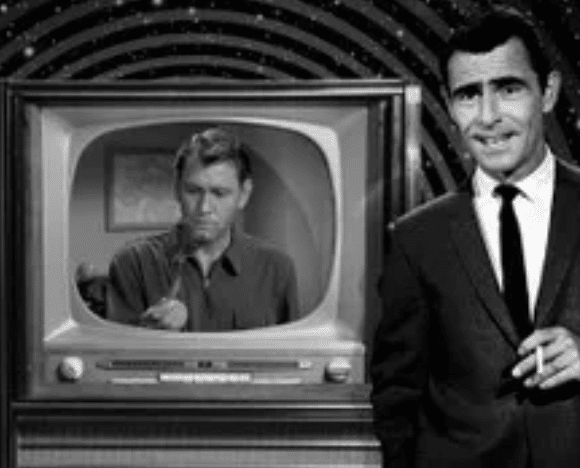
Over the 4th of July, the SyFy cable channel and local TV stations across the U.S. ran a marathon of The Twilight Zone. It was called “Rod, White and Blue.”
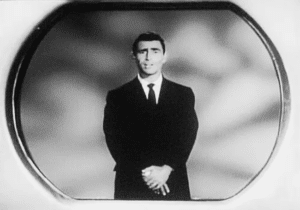
Rod Serling narrating The Twilight Zone.
They mostly aired episodes from the original series that ran 1959-1964. Those are the black and white episodes with an earnest Rod Serling giving the introductions. They filled out the weekend’s schedule with episodes from the 1986 and 2002 reboots, but there’s nothing like the original.
From the Early Days of Television
Keep in mind that the original Twilight Zone began airing in 1959 when television, as we came to know it, was about 10 years old. Early anthology shows like The Twilight Zone were part of how we shared stories through this new medium, whether originally created or from common folklore. TZ‘s plot lines and anxieties served as part of the basis of our science fiction, fantasy and horror tropes.
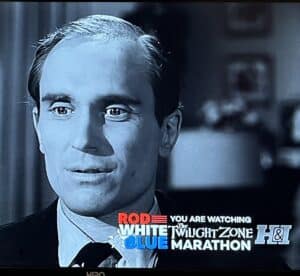
Robert Duvall (1963).
Why Watch?
The Twilight Zone fascinated me when I discovered it as a teenager in 1980. Each episode shows a world that looks like ours (or at least people who look like us) but with a significant social, cultural or scientific difference. Life in The Twilight Zone is slightly off, but in a way that makes you think.
TZ episodes don’t make things easy for its audience and can leave you wondering “What did I just watch?” And, of course, the twist endings are brilliant. Or rather, they were brilliant in their day. Those wonderful endings have been copied so many times that they’re a bit predictable now.
Another reason to watch is that it’s fun to see famous people at the very beginning of their careers. Just a few are William Shatner, Robert Redford, The Professor from Gilligan’s Island and Elizabeth Montgomery before Bewitched.
A Rich Source of Ideas
Sometimes people tell me they can’t watch The Twilight Zone because it’s too scary, but that must be a reputation the show got from its first audiences. There aren’t many episodes that still come across as scary. In fact, so many script writers have copied the original TZ plot lines I’m afraid they’ve become clichés.
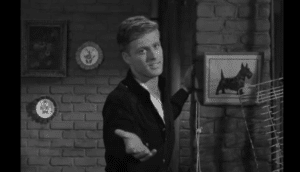
A young Robert Redford on The Twilight Zone (1962).
While watching this year’s marathon, I was struck by how many episodes have plot lines and themes that recent shows and movies are still using. Here are just some I noticed.
“Elegy” (S1:E20) is the prototype premise for Black Mirror’s “San Junipero.”
“A Nice Place to Visit” (S1:E28) has the same plot twist as the show The Good Place (so pick only one of those to watch).
“The Chaser” (S1:E31) was the first time a show used the plot device of today’s Obsession.
“The After Hours” (S1:E34) must have inspired the movie Mannequin (plus it’s referenced near the end of the third season of Severance).
“The Lateness of the Hour” (S2:E8) and “In His Image” (S4:E1) use the plot twist of countless science fiction movies (Moon and Bladerunner are just two of them).
“The Night of the Meek” (S2:E11) was the first place American audiences saw an Everyman called upon to be Santa Claus.
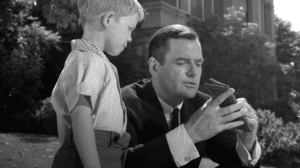
On the left, a very, very young Ron Howard (1959).
“Shadow Play” (S2:E26) uses the concept of someone’s dream holding a universe of people. Stephen King uses that idea in “The Life of Chuck,” as does the movie based on that short story.
“Little Girl Lost” (S3:E26) is about someone unexpectedly going through a wall into another dimension similar to Backrooms and many other narratives.
“Living Doll” (S5:E6) (yup, the one with Telly Savalas) yielded the Chucky franchise and the movie Annabelle.
In “Number Twelve Looks Just Like You” (S5:E18) a character says, “Nobody has ever been forced to take transformation if he didn’t want it. You see the problem is to simply to discover why you don’t want it, and then to make the necessary corrections.” We hear similar reassurances in Pluribus.
“From Agnes, with Love” (S5:E20) deserves special attention. Several TZ episodes feature a robot built to provide human companionship, but this episode, first aired in 1964, features a computer built strictly to support the U.S. space program. But when Agnes’ main programmer wonders how he can make an impression on a coworker he’d like to date, he turns to the computer for advice. This leads to Agnes guiding him through a series of relationship moves with mixed results.
Fifty years before ChatGPT, The Twilight Zone presented a man using AI for his private use, specifically for romantic advice. In 1964 it was undoubtedly viewed as a futuristic fantasy. Today it’s chilling (or just curious, depending on your view of alien intelligence).
Increase Your Pop Culture Knowledge
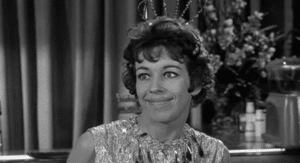
Carol Burnett, The Twilight Zone (1962).
If you’ve never watched The Twilight Zone and decide to start now, you’re about to discover the origin of the “Doo-doo-doo-doo” tune people sing when life gets weird. Keep in mind that you’re watching the source material for decades of shows and movies. (All TZ episodes are currently on Paramount Plus and Tubi.)
But you wouldn’t watch a movie about lovers from clashing families, then later read Romeo and Juliet and say, “Shakespeare totally copied Franco Zeffirelli” (I hope). Likewise, don’t make the mistake of thinking Rod Serling was rehashing stories everyone had already done. The Twilight Zone came first.
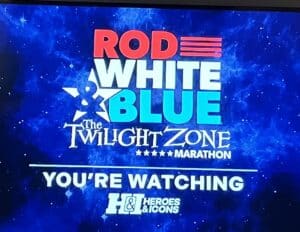
You can also read or comment on this article on Substack.

I remember the weather over the 4th in Chicago wasn’t so good, a Twilight Zone marathon sounds like an ideal way to have spent it. I love the original Twilight Zone episodes also. I recently had insomnia and streamed the episode “Eye of the Beholder” on Tubi. So good! There aren’t many modern day series that comes close to the black and white magic of this original, though I also enjoy Fringe and Severance- similar with mind-bending concepts, very different in story telling structures however, plus Sterling himself was a true original.
Rod Serling had to fight the network over and over again to create the show he wanted, but it was worth it. Unfortunately, when CBS offered him $50,000 for the rights to The Twilight Zone, he took it, thinking the show wasn’t worth more than that. Of course, back then most series just sat on a shelf after airing a few times. He had no way to know what a long, profitable life those episodes would have in reruns and then streaming.