
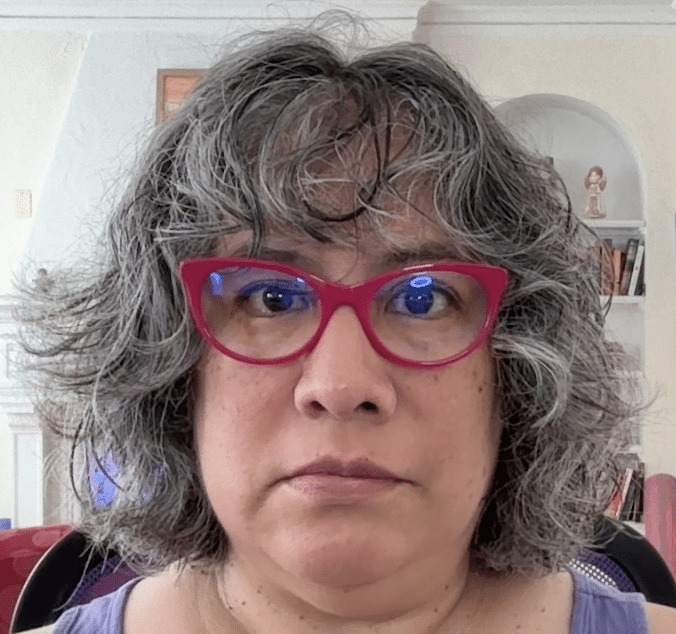
I’ll be 60 this summer and I don’t want anyone to tell me that’s not old or that I could have decades ahead of me or any of the delusional statements that are usually made by people who are around my age.
I understand that most people are afraid of death and that this fear gets stronger the older they get, but I resent people imposing their fear on me. When my peers won’t let me finish a sentence that refers to myself as old, it feels like they’re denying my experience of my life. That’s rude.
Denying that we’re old keeps us from getting health services, causes us to procrastinate on critical end-of-life arrangements, and allows us to push to the back of our minds the relationships we keep meaning to re-establish. Denying that we’re old can make us think there’s plenty of time for that bucket list, until suddenly there’s no more time. Denying that we’re old can even make us push ourselves in ways that are harmful to ourselves and/or others.
This behavior in my peers irritates me, and then I watched a video called What 92 Years Taught Me: 10 Lessons I Wish I’d Learned in My 50s and 60s. In it, a woman named Lorraine explains the realities of living decades past the age of 60 and they are sobering. Among other things, she talks about decreasing physical abilities, the difficulties of retirement and the loneliness of having the people closest to you die.
Before I became saddened by it, this video felt vindicating. See? Take it from a 92-year-old woman: life changes after age 60 no matter how much you pretend it doesn’t. Listening to her reminded me of what I’ve heard about how aging causes us to lose physical (all of us) and mental (most of us) capabilities. While you can take action to slow down that process, you can’t stop it, and you certainly can’t reverse it, no matter how consistently you color your hair or keep up with the latest exercise or fashion trends.
Lorraine also urges us to not put anything off because we believe we have plenty of time. Forgive people today, spend time with people now, take that vacation. Not only do we not know when our time will be up, we don’t know when our loved ones’ time will be up.
 I maintain a strong sense of how soon my time might be up. I made a will when I turned 50. After that I felt ready to go. Maybe my acceptance of death comes from my experience that life hasn’t been that great. I don’t believe life is fundamentally good or “better than the alternative.” I have chronic physical pain. It’s clear to me that the years ahead will have increasing pain and decreasing functionality, so it does not comfort me when someone tells me I still have many years ahead of me or I could still live for decades.
I’m watching my dad’s old age with concern because it’s clear that he’s not living the life he hoped for and I’m pretty sure that’s very common. I don’t want to take decades to slowly and painfully fade out, cognitively and socially. That sounds terrible, so please don’t tell me I could live a long time.
If it weren’t so irritating, I’d be bemused by how many of my 50+ friends work to convince me that I’m not old. Of course it’s really them trying to convince themselves that they aren’t old. But they are. We are. We’re losing muscle mass and bone density and hair and cognitive capabilities by the year. We more frequently hear about serious health problems or deaths of peers and coworkers (or the partners of peers and coworkers).
As I see it, one of the worst mistakes we make as we age is that we stop making new friends. Lorraine says she had three very close friends and believing that the four of them would be there for each other indefinitely left her devastated when each of them died. She suggests that we always make new friends, including friends who are younger than us.
Grow old with me. The best might be behind us, but if we accept our new reality we can do things to make the last third (quarter?) of our lives better than they’ll be if we stay in denial.



0 Comments